ServicesWindshield Protection Film
Windshield Protection Film in Diamond Springs
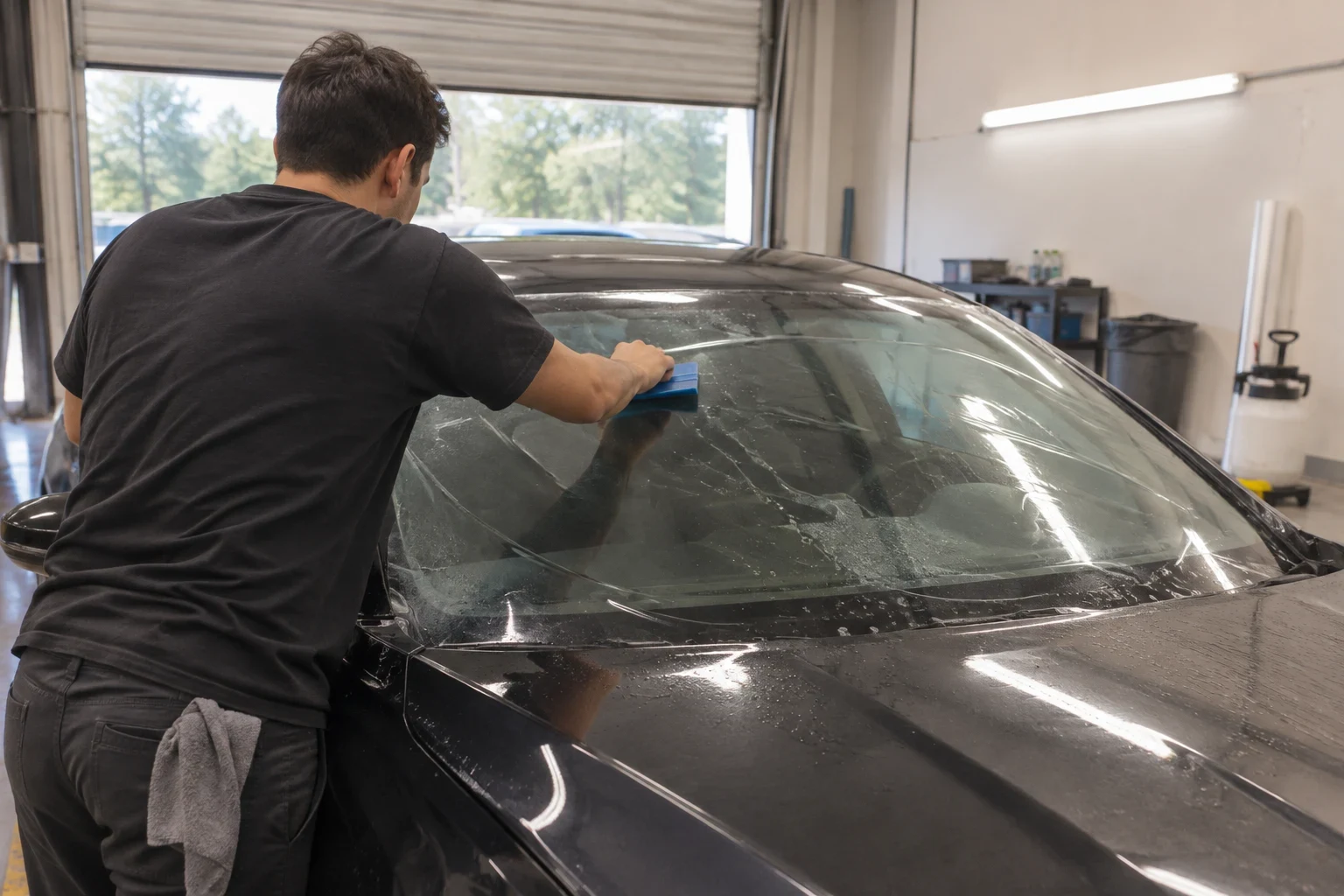
Windshield protection film is a thin, optically clear layer that takes the small rock strikes that chip and crack glass. We look over your windshield first, tell you plainly whether it's a good candidate, and install the film at our shop so you drive off with clear, protected glass.
A Sacrificial Layer Between Your Glass and the Road
The film goes on the outside of the windshield, where the impacts happen. When a pebble flies off a truck tire, the film absorbs and spreads that hit instead of letting it bite straight into the glass. If the film gets scuffed or nicked over time, it can be peeled and replaced. Replacing a windshield is a much bigger job, especially on newer cars where the cameras behind the glass need recalibrating afterward.
It's the right call when your glass is in good shape and you want it to stay that way. Fresh windshields, new vehicles and cars that see a lot of gravel shoulders and foothill highway miles benefit most. It is not a fix for damage that's already there, and we'll say so if that's what we find.
That's why every job starts with a close look at the glass. We check for chips, star breaks, light pitting and wiper haze, then tell you what we see before recommending anything.
What Your Windshield Film Install Includes
Glass inspection before anything else
We check the full windshield under good light for chips, cracks, pitting and old repair marks. If something needs attention first, you hear about it before any film is cut.
Deep cleaning and decontamination
The glass gets washed, clayed and wiped down so no grit, wax or road film ends up trapped under the film. Clean prep is what keeps the finished install clear.
Film shaped to your windshield's curve
Windshields bend in two directions, so the film is heat-formed to lie flat across the whole surface. That keeps edges tight and avoids lift at the corners.
Camera and sensor area check
Many cars have lane cameras and rain sensors behind the glass. We look at where those sit and confirm the film area won't get in their way.
Edge finishing
Edges are trimmed cleanly and sealed down so wipers and car washes don't catch them.
Aftercare walkthrough
Before you leave, we explain how long to wait before washing, what to use on the glass and what normal wear on the film looks like.
Signs Windshield Film Makes Sense for Your Car
- You keep getting chips
- If you've had more than one chip repaired, your driving puts your glass in the line of fire. Film gives those hits somewhere else to land.
- You just got a new windshield
- Clean, undamaged glass is the ideal surface for film. Protecting it right away means you're not back in the same spot next year.
- Your car has cameras behind the glass
- On many newer vehicles, a windshield swap means a camera recalibration too. That makes keeping the original glass intact worth more.
- You drive behind trucks and gravel
- Commutes with work trucks, construction zones or mountain road debris throw a lot of small stones. Film is built for exactly that.
- The glass looks hazy or sandblasted
- This one is a sign to have us look first. Heavy pitting may mean film isn't the best next step, and we'll tell you honestly if new glass makes more sense.
How the Job Runs at Our Shop
- 1
A quick call to talk it through
Tell us about your car and how you drive it. We'll give you a sense of what to expect and set a time for you to bring it in.
- 2
Inspection and plain findings
With the car in the shop, we look the glass over and walk you through what we found. If there's a chip that should be repaired first, or pitting that changes the plan, you know before work begins.
- 3
Prep and install
We clean and decontaminate the glass, then fit, shape and trim the film. The car stays indoors through the install so dust stays off the surface.
- 4
Final check and handoff
We look through the glass from the driver's seat, check the edges and go over care. A little haze can show while the film settles, and we'll tell you how long that usually takes.
What Moves the Price of Windshield Film
Every windshield is a little different, so we price after we know your car and see the glass. Your quote covers the film, the prep and the install, and we explain each part so nothing comes as a surprise. These are the things that change the number most.
- Size and curve of the glass
- Large, steeply curved windshields on trucks and SUVs take more film and more time to shape than a flat, compact one.
- Condition of the windshield
- Clean glass goes straight to prep. Chips that need repair first or heavy contamination add a step.
- Cameras and sensors
- Vehicles with driver-assist cameras or rain sensors need more careful planning around those areas.
- Pairing with other work
- Many customers protect the glass in the same visit as window tint or paint protection film on the front end. Doing them together can make scheduling simpler, and we'll lay out the options so you only add what helps.
Windshield Protection Film Questions
- Will the film make it harder to see through my windshield?
- It shouldn't. The film is optically clear and made for windshields, and we check the view from the driver's seat before you leave. A slight haze can show right after install while moisture works out, and that clears as the film settles.
- Can you put film over a chip I already have?
- We don't recommend it. Film won't repair a chip, and covering one can hide a crack that's still spreading. If we find damage during the inspection, we'll tell you and suggest getting it repaired first.
- How long does the film last?
- It's a wear layer, so it depends on your miles, your wipers and how much debris it takes. Over time it can collect small marks from doing its job. When it's worn, the old film comes off and a new piece goes on, and your original glass is still intact underneath.
- Will it interfere with my car's cameras or rain sensor?
- We look at where those sit behind the glass during the inspection. The film is clear and goes on the outside, and we make sure the install area works with your vehicle's setup before we start.
- How should I wash my car afterward?
- Give the film a few days before washing or running the wipers hard. After that, regular washing is fine. Avoid scraping ice with metal tools and replace worn wiper blades, since a chewed-up blade can scuff the film.
- How long will my car be at the shop?
- Most windshield installs fit in a single visit. We'll give you a clear drop-off and pickup time when you bring the car in, based on what the inspection shows.
Let Us Take a Look at Your Glass
Call and tell us about your car, and we'll set a time for you to bring it to our shop. You'll get a quote and an honest read on whether film is right for your windshield.