ServicesPaint Protection Film
Paint Protection Film in Diamond Springs
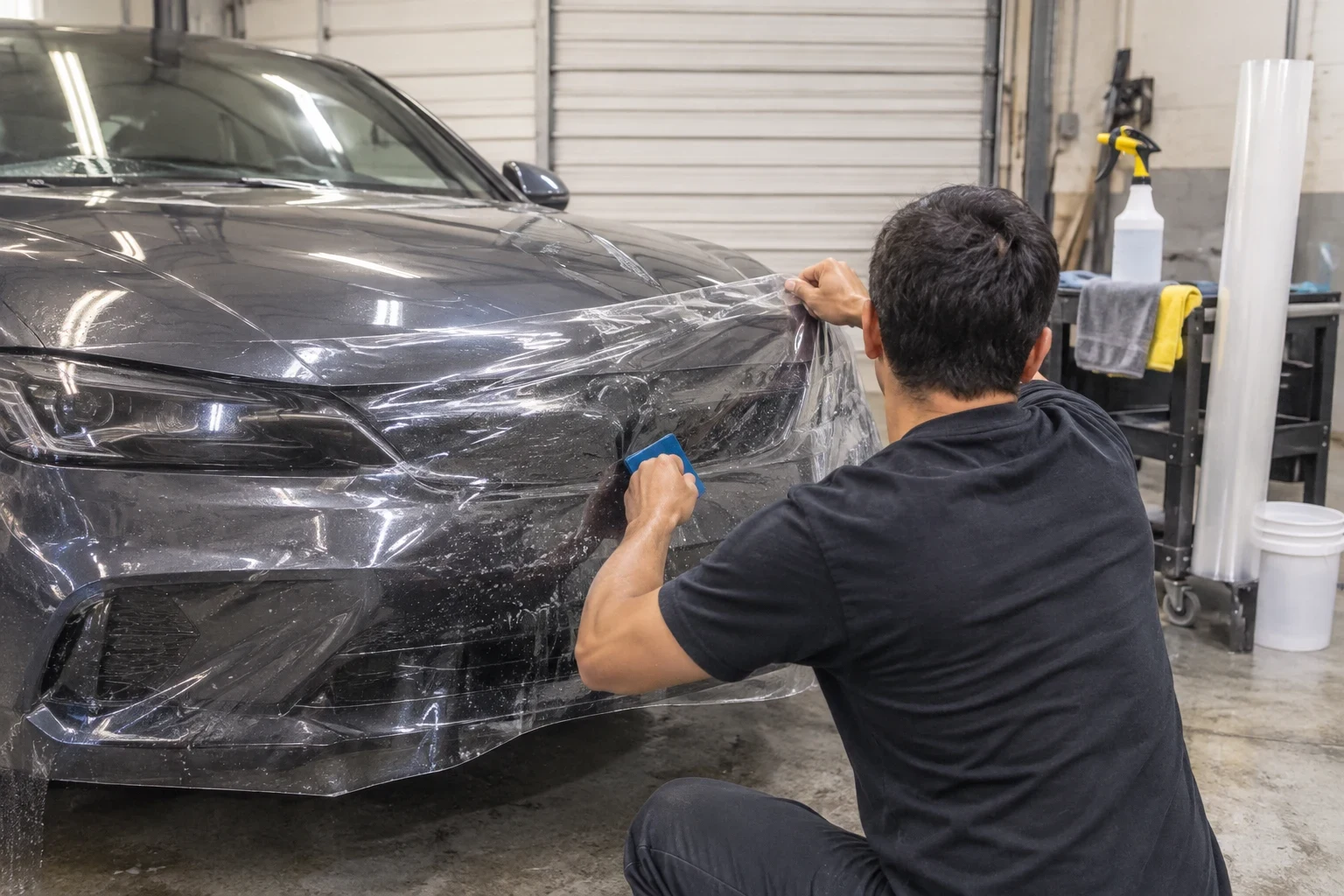
Paint protection film is a clear urethane layer that takes the rock chips and scrapes so your paint does not have to. We look over your car's paint first, show you what we find and then recommend the coverage that fits how you drive.
What paint protection film does for your car
Paint protection film, often called clear bra, is a thin, nearly invisible urethane film applied over painted panels. It absorbs the impact from gravel, road debris and parking lot scuffs that would otherwise chip or scratch the clear coat. Light swirls in the top layer of many modern films relax and fade with warmth, so the surface stays clean looking for longer.
Before we talk coverage, we put your car under good light and go panel by panel. If there are chips, deep scratches or old touch-up paint, we point them out, because film locks in whatever is underneath it. You hear the honest version: what film will help, what it will not hide, and whether a little paint correction first is worth it.
It makes the most sense on newer cars, vehicles that see a lot of highway miles, and anything you plan to keep looking sharp for years. Commuting on Highway 50 behind gravel trucks is a fast way to pepper a hood, and film is the most direct way to stop that damage before it starts.
What our PPF install includes
A paint inspection under shop lights
We check each panel for chips, swirls, scratches and prior repairs, and we show you what we see. Nothing is recommended until you know the paint's real condition.
Coverage options explained plainly
Partial front, full front, track-style packages or the whole car. We explain what each one protects and which areas take the most hits on your kind of driving, then let you decide.
Decontamination and prep
The paint is washed, clayed and wiped down so the film bonds to clean clear coat, not to road film or old wax. Good prep is the difference between film that lies flat and film that lifts at the edges.
Precision cut and careful install
Film is cut to your vehicle's panels and laid with slip solution, then squeegeed out by hand. Where it makes sense, edges are wrapped around panels so the seam is harder to spot.
Final check and care walk-through
We look over every edge before you pick up the car and tell you how to wash it during the first days while the film finishes curing.
Signs it's time to consider paint protection film
- You just bought a new car
- The best time to protect paint is before the first chip. Film on a fresh factory finish keeps the front end looking new instead of slowly speckled.
- Your hood and bumper are collecting chips
- Small white dots on the leading edges mean debris is getting through. Film will not erase existing chips, but it stops new ones from joining them.
- You drive gravel roads or long highway stretches
- Loose rock and road grit wear on the front of a car fast. Regular drivers on rural roads usually get the most from full-front coverage.
- Door edges and cup areas are scratched
- Rings, keys and car doors in tight lots leave marks. Small pieces of film on door edges, handle cups and the rear bumper load area are an easy fix.
- You care about resale or lease return
- Clean, chip-free paint helps when you sell or turn in a lease. Film protects the original finish you would otherwise pay to touch up.
How your PPF appointment goes
- 1
Talk it through by phone
Tell us about your car, how you use it and what is bothering you about the paint. We give you a quote range for the coverage you are considering and set a time to bring it in.
- 2
Look before anything else
When the car arrives at our shop, we go over the paint with you if you have the time. If we find something that changes the plan, like chips that should be touched up first, we say so before starting.
- 3
Prep and install
We clean and decontaminate the paint, then install the film panel by panel. Larger coverage takes longer, and we will tell you when to expect the car back.
- 4
Final check and handover
Every edge and seam gets one more close look. You get simple care instructions and a clear explanation of what is normal as the film settles over the next few days.
What affects the cost of paint protection film
PPF pricing comes down to how much of the car you cover and how much work the paint needs first. We explain each piece when we quote so you know exactly what you are paying for and why.
- How much coverage you choose
- A partial hood and fender package uses far less film and labor than a full front end or a full wrap. Many drivers start with the front and add more later.
- Body lines and trim details
- Aggressive creases, deep bumper intakes and detailed side mirror housings call for more stretching, trimming and careful edge work. A squared-off truck front usually goes faster than a low, curvy sports car nose.
- What we find in the paint
- Swirls or scratches that would be sealed under the film may need paint correction first. We show you the findings and you decide whether it is worth doing.
- Gloss or matte finish film
- Standard gloss film keeps the factory look. Matte finish film changes the appearance of the paint and is priced differently.
- Removing old film
- Yellowed or peeling film from a past install has to come off carefully before new film goes on, which adds time.
Paint protection film questions
- Will paint protection film hide the chips I already have?
- No, and we will not tell you otherwise. Film is clear, so existing chips stay visible underneath, though they can look a little softer. If chips bother you, we can talk about touch-up before the install so they are sealed in a better state.
- What is the difference between PPF and ceramic coating?
- Paint protection film is a physical layer that absorbs rock impacts and scrapes. Ceramic coating is a thin, hard layer that makes paint glossier and easier to wash but does not stop chips. Some owners put film on the front and ceramic coating over the whole car, and we can explain whether that combination makes sense for you.
- Can I wash my car after the install?
- Yes, after a short wait while the film cures. We will tell you how long to hold off and how to wash it afterward. Hand washing with a pH-neutral soap is the gentlest option, and you should avoid pointing a pressure washer straight at film edges.
- Will the film turn yellow or peel?
- Modern quality films are made to resist yellowing, which is a common problem with older clear bra products. Peeling usually comes from poor prep or rushed edges, which is why we spend the time cleaning and checking the paint before and after the install.
- Can the film be removed later?
- Yes. Film applied over healthy factory paint can be removed by a shop with heat and patience. Paint that was repainted or already damaged carries more risk, and we will point that out during the inspection.
Keep the chips off your paint
Tell us about your car and the coverage you have in mind. We will explain the options, give you a quote and set a time to bring it to our shop in Diamond Springs so we can look it over.